Textiles & Home
A Closer Look at St Geneve Throws: Fiber Blends, Weaves, and Finishes
A throw can look like a simple rectangle of warmth. But the fibers inside its yarn, the structure of its weave, and the finish along its edges all influence how it feels, hangs, and fits into a room. St Geneve’s Renata and Freya throws offer a practical way to examine those details.
The details behind a throw’s character
A throw is a small textile with a surprisingly large job. It may be pulled over a lap on a cool evening, folded across the end of a bed, or left over a chair as a layer of color and texture. Its usefulness depends on more than its appearance. Fiber content affects softness and warmth; construction influences drape and surface; and finishing details can change how a piece looks in a room and how it wears over time.
That is why a label saying “cashmere blend” is only a beginning. The proportion of cashmere, the other fibers in the yarn, the way the yarn is woven, and the care the fabric requires all matter. Two throws containing cashmere may feel quite different: one may be light and fluid, another more substantial, textured, or resilient.
St Geneve’s Renata and Freya throws make useful case studies. Renata pairs cashmere with extra-fine merino wool in a jacquard design. Freya combines superfine merino wool and cashmere in a herringbone weave. Both are made in Lithuania, but their fiber ratios and surface patterns create different expressions of softness, texture, and visual weight.
Cashmere and merino: a blend, not a shortcut
Cashmere comes from the fine undercoat of cashmere goats. Its fibers are prized for a soft hand and warmth relative to their lightness. Merino wool, from Merino sheep, is also valued for softness; the finer the wool, the less coarse it tends to feel against the skin. In a blended textile, each fiber contributes to the overall character, but no single property can be inferred from the word “cashmere” alone.
The Renata throw is described as 20% cashmere and 80% extra-fine merino wool. That composition makes the piece primarily a merino textile, with cashmere contributing to its blend rather than defining it alone. It is handcrafted in Lithuania and has a jacquard pattern, a neutral palette, and a three-inch fringe. The stated dimensions are 55 by 68 inches, and the care instructions specify dry cleaning.
Freya reverses the proportions: it is made from 75% superfine merino wool and 25% cashmere. Its herringbone weave gives the surface a repeating, angled structure, and fringe finishes the edges. The throw measures 55 by 78 inches; dry cleaning is recommended. The larger cashmere share does not by itself establish that Freya will feel exactly a certain way compared with Renata. Yarn thickness, weave density, finishing, and individual sensitivity all contribute to the experience of the fabric.
Blending fibers can be a way to balance qualities. Merino and cashmere are both animal fibers, but their precise behavior depends on processing and construction. A well-made blend may bring together softness, warmth, and a particular kind of drape. When comparing labels, it is more useful to consider the full composition and construction together than to treat a higher percentage of one fiber as a universal measure of quality.
For readers exploring the broader category, the St Geneve Renata Cashmere Blend Throw and St Geneve Freya Wool and Cashmere Throw illustrate two distinct approaches to combining cashmere and merino.
Why weave matters
Weave is the arrangement of yarns crossing one another in a fabric. It affects not only a textile’s appearance but also its structure, flexibility, and surface. A weave does not determine warmth on its own: fiber, yarn size, fabric density, and finishing all play a part. Still, it offers a useful clue to the visual and tactile character of a throw.
Jacquard: pattern built into the fabric
Renata’s jacquard design uses woven structure to create a patterned surface. Rather than relying solely on a printed motif, jacquard construction controls how yarns appear in different parts of the fabric. The result can give a pattern depth and a tapestry-like quality, particularly when color and texture interact.
Renata’s neutral design is described as drawing inspiration from Renaissance-era pattern and traditional tapestry work. That description points to its visual language, not to a claim that the throw is a historical reproduction. In a room, a patterned neutral can add detail without introducing a strong block of color. Its effect may be subtle from across the room and more apparent when seen up close.
Herringbone: a quiet geometry
Freya’s herringbone weave creates a repeated V-shaped arrangement, a familiar pattern in textiles ranging from suiting to furnishings. Its geometry tends to read as texture rather than as a large, high-contrast motif. The pattern can catch light differently across its angled lines, giving a plain color more visual movement.
The difference between jacquard and herringbone is not simply one of decorative style. Each construction gives the surface its own rhythm. A jacquard can support more elaborate patterning; herringbone offers a structured, orderly repeat. Neither is inherently more durable or more comfortable. Those outcomes depend on the specific yarn, density, craftsmanship, and use.
Drape, weight, and the feel of warmth
Drape describes the way a textile falls when it is held, folded, or laid over a surface. A throw with a fluid drape may settle easily over a sofa arm or the corner of a bed. A more structured fabric may hold its shape and display its pattern with greater definition. Weave and finishing affect this quality, as do the yarn’s thickness and the fabric’s overall weight.
Neither Renata nor Freya is presented with a weight per square metre in the available product details. That means it would be misleading to rank them by measurable heaviness. Their dimensions offer a more concrete distinction: Freya is ten inches longer, while both are 55 inches wide. The extra length may affect how it covers a bed or wraps around a seated person, though the best fit depends on the intended use and the size of the furniture.
Warmth is similarly relative. Cashmere and fine merino are valued as insulating fibers, but a throw’s actual performance also depends on how much material is present and how tightly it is constructed. A decorative layer on a bed may need to provide only a little extra warmth; a throw intended for regular use on a cool evening may need more coverage. Matching the textile to the room’s climate and the user’s habits is more reliable than expecting a fiber name to answer everything.
Breathability and comfort are part of the picture, too. Natural animal fibers can absorb moisture, but the feel of a particular fabric will vary with construction and personal preference. A person sensitive to wool may want to handle a sample before choosing a wool-cashmere blend, if sampling is possible. Even fine fibers are not guaranteed to feel identical to everyone.
Finishing details: fringe, color, and character
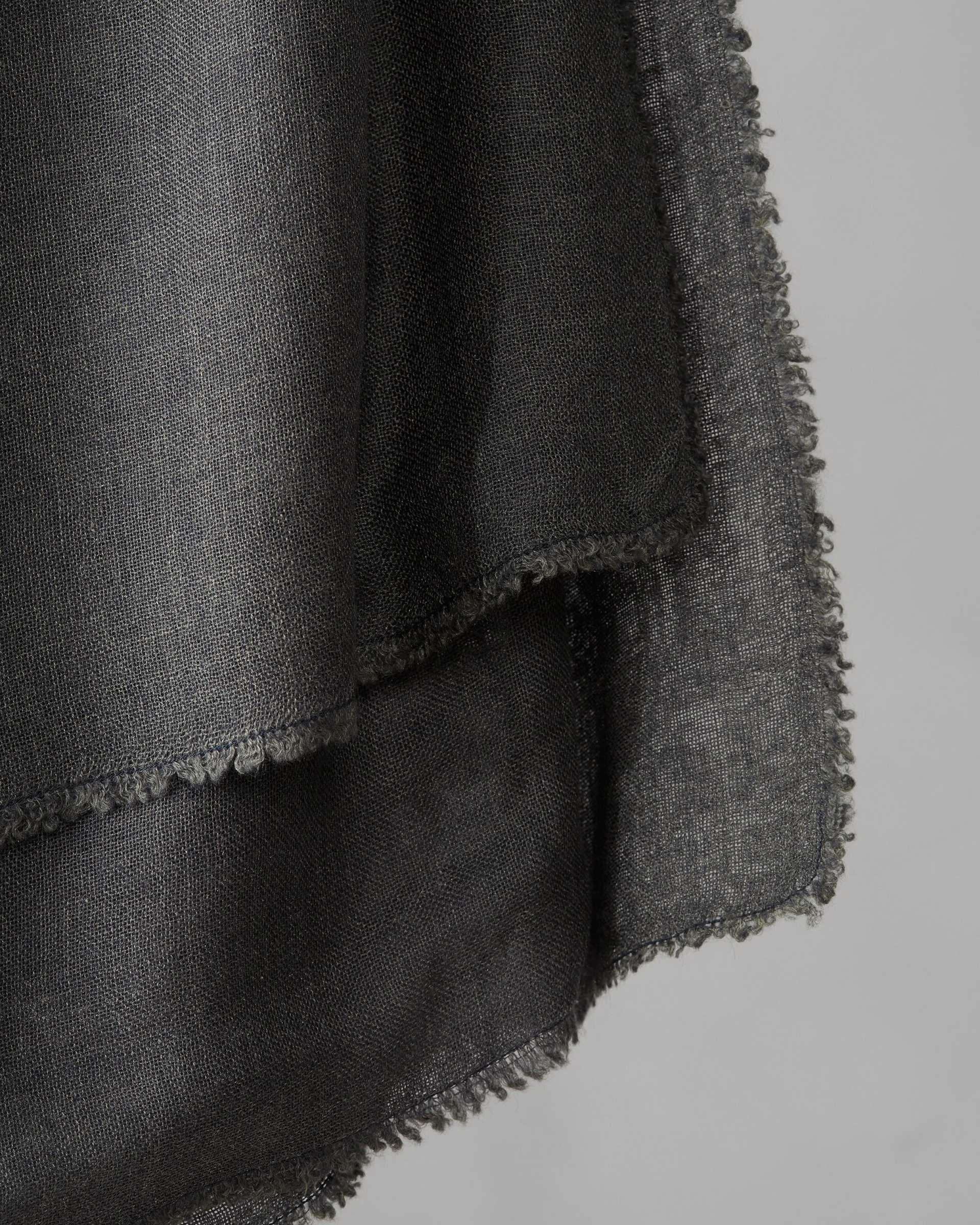
Fringe is a visible finishing detail, but it is not merely decoration. It gives the edge a softer, less formal outline and may reinforce the sense that a throw is meant to be draped rather than tightly tucked. Renata has a three-inch fringe, while Freya is described as having a luxurious fringe. The distinction may influence how each piece sits when folded or placed across furniture.
Fringe also calls for sensible handling. Repeated pulling, snagging, or catching on furniture can disturb loose edge elements. When storing a throw, folding it rather than hanging it by its fringe can help avoid unnecessary strain. If a fringe becomes tangled, gently separating it by hand is preferable to pulling at knots. Always defer to the maker’s care directions for specific cleaning or repair questions.
Color is another part of construction and atmosphere. Renata’s neutral colorway is described as versatile, while Freya is offered in a selection of refined hues. Neutral tones can sit quietly alongside patterned bedding; a more distinct color can make a throw an intentional accent. Because dye lots may vary slightly, a difference in shade between production batches is possible. That variation is not automatically a defect, but it is worth keeping in mind when coordinating textiles purchased at different times.
These details matter most in combination. A patterned weave, a fringe, a particular shade, and the scale of the throw all contribute to how it reads in a space. The most successful choice is not necessarily the most ornate one; it is the textile whose surface and proportions make sense alongside the bedding, furniture, and everyday use around it.
Styling a throw without crowding the room
On a bed, a throw can mark the foot of the mattress with a different texture or introduce a softer layer over smooth sheets and a duvet. Folding it lengthwise often creates a clean line; a looser fold can make the arrangement feel less formal. The width and length matter: a 55-inch-wide throw can be substantial across a bed, but it will not cover a full mattress in the way a bedspread does.
On a sofa or armchair, a throw is both a practical layer and a textile accent. A herringbone surface can supply quiet pattern where upholstery is plain. A jacquard design can add intricacy to a room already built around simple shapes. In either case, a restrained arrangement helps the fabric remain legible. A throw does not need to be perfectly folded to feel considered, but its fringe and pattern will be more visible if they are not buried beneath cushions or other layers.
For seasonal layering, think in terms of contrasts that have a purpose. A fine wool-and-cashmere throw may add comfort without the bulk of a heavy blanket, while cotton or other lighter layers may suit warmer months. The actual warmth will depend on the room, the textile’s construction, and the person using it. Describing a throw as suitable “year-round” without considering those factors would be too broad; its usefulness across seasons is ultimately a matter of climate and preference.
Care is part of the material choice
Renata’s care instructions say dry clean only. For Freya, dry cleaning is recommended. The distinction in wording should not be ignored: it is best to follow the care label attached to the specific item and seek guidance from a qualified cleaner when needed. Water, heat, agitation, and incorrect drying can alter the shape or surface of animal-fiber textiles.
Between cleanings, simple habits may reduce the need for more intensive care. Airing a throw in a well-ventilated area can help refresh it; brushing or removing surface debris should be done gently and only with a method suitable for the fabric. Avoid storing animal-fiber textiles where moisture, direct sunlight, or pests can cause damage. Clean and completely dry the piece before long-term storage, and use a clean, protective storage container.
Pilling deserves a measured response. Small pills can form when loose fibers tangle at the surface, particularly in areas subject to friction. Pilling does not necessarily mean a textile is poorly made, nor can it be prevented entirely. If removing pills, use a fabric tool with care and test it in an inconspicuous area first. Aggressive shaving or pulling pills by hand can damage yarns and change the appearance of the surface.
A thoughtful way to compare cashmere blends
When evaluating a throw, begin with the facts that can be checked: fiber percentages, dimensions, weave, country of manufacture, and care instructions. Then consider the questions that are personal: Is it meant for daily use or occasional display? Will it sit against the skin? Does the room call for a subtle texture or a more visible pattern? Is dry-clean-only care practical?
- Read the full fiber composition. A blend’s percentages provide more information than a product name alone.
- Look at construction. Jacquard and herringbone describe different surface structures, each with a distinct visual effect.
- Check the measurements. Dimensions shape how a throw can cover a person, chair, sofa, or bed.
- Consider the finish. Fringe, color, and pattern influence both appearance and handling.
- Plan for care. Cleaning requirements are part of the long-term effort of owning a textile.
- Keep sustainability claims specific. Certifications, sourcing, and production information should be assessed on the evidence provided rather than inferred from a luxury fiber.
Renata and Freya show why “cashmere throw” is not a complete description. Renata’s 20% cashmere and 80% extra-fine merino composition sits alongside a jacquard pattern and pronounced fringe. Freya’s 25% cashmere and 75% superfine merino blend is paired with herringbone construction and a longer format. Both combine softness-oriented fibers with considered design, but they are not interchangeable objects.
The useful luxury of a well-chosen layer
A fine throw earns its place through repeated use, not simply through the language attached to its fibers. The choice of cashmere, merino, or a blend sets a starting point. Weave gives the surface its pattern and structure; finishing gives the edges their character; dimensions and care requirements determine how comfortably the piece fits into daily life.
In St Geneve’s Renata and Freya, those decisions are easy to see. The first leans toward the patterned depth of jacquard and a neutral, tapestry-inspired look. The second relies on the measured geometry of herringbone and a blend with a higher stated share of cashmere. Their shared Lithuanian manufacture and wool-cashmere basis connect them, while their proportions and construction set them apart.
That is the broader lesson of bedding textiles: appearance, comfort, and performance are built from details. Understanding those details makes it easier to choose a throw for the room and the way it will actually be used—and to care for it in a way that helps preserve its softness, structure, and place in the home.